
Skip to content

Shoulder Physical Therapyin New York, Pennsylvania, Connecticut, Massachusetts, and North Carolina

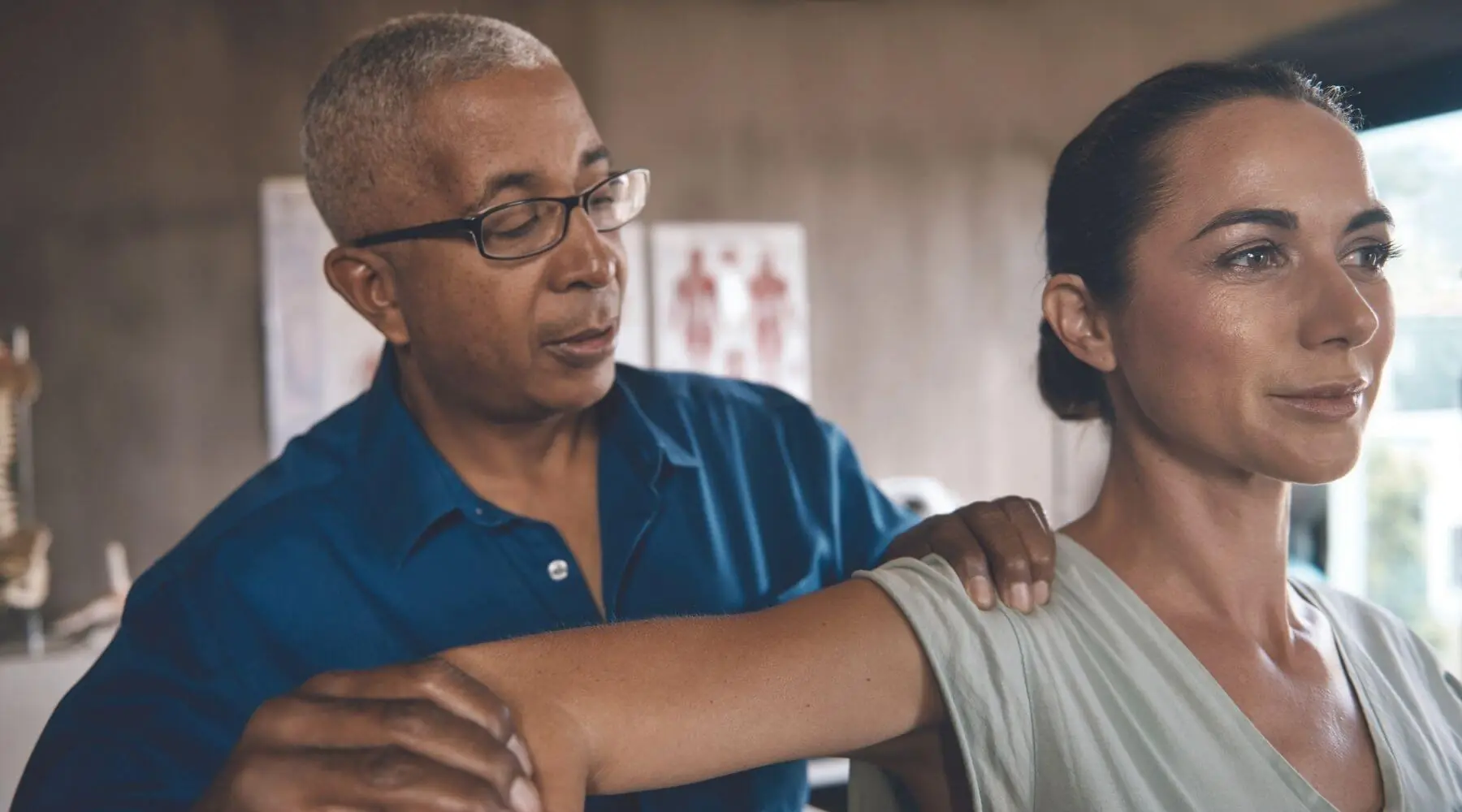
Shoulder pain can arise from within the shoulder joints and surrounding muscles, ligaments and tendons. On occasion, it is caused by a problem within the shoulder that worsens when you move it. Shoulder pain that isn’t worsened by moving your shoulder is more likely to be something called “referred pain,” which is caused by diseases or conditions affecting structures in your chest or abdomen. If shoulder pain is accompanied by difficulty breathing or a sense of tightness in the chest, please seek immediate medical attention as it may be a symptom of heart attack.

Rotator Cuff

Your rotator cuff is made up of the muscles and tendons in your shoulder. These muscles and tendons connect your upper arm bone with your shoulder blade. They also help hold the ball of your upper arm bone firmly in your shoulder socket. The combination results in the greatest range of motion of any joint in your body. A rotator cuff injury includes any type of irritation or damage to your rotator cuff muscles or tendons. Causes of a rotator cuff injury may include falling, lifting and repetitive arm activities — especially those done overhead, such as throwing a baseball or placing items on overhead shelves.

Frozen Shoulder

Frozen shoulder, also known as adhesive capsulitis, is a condition characterized by stiffness and pain in your shoulder joint. Signs and symptoms begin gradually, worsen over time and then resolve, usually within a two-year period. Your risk of developing frozen shoulder increases if you’ve recently had to have your arm in a sling for several weeks, or if you have had surgery in which your arm was immobilized in a specific position for a prolonged period.

Information courtesy of the American Physical Therapy Association.

The ACCESS PT Difference

Over 50 Convenient Locations

Customized Care Plans

Appointments within 24 hours

Shoulder Physical Therapy Locations

ACCESS PT Brookfield, CT

31 Old Route 7
Suite 1
Brookfield, CT 06804
View Location

ACCESS PT Cortlandt Manor, NY

2050 E Main Street
Suite 4
Cortlandt Manor, NY 10567
View Location

ACCESS PT Danbury, CT

40 Old Ridgebury Rd
Suite 102
Danbury, CT 06810
View Location

ACCESS PT Goshen, NY

94 Clowes Ave
Goshen, NY 10924
View Location

ACCESS PT Kent, CT

64 Maple Street
Kent, CT 06757
View Location

ACCESS PT Kingston, NY

1 Boices Lane
Ste. 5
Kingston, NY 12401
View Location

ACCESS PT Middletown, NY

495 Schutt Road Extension
Suite 9
Middletown, NY 10940
View Location

ACCESS PT Monroe, NY

785 Route 17M
Monroe, NY 10950
View Location

ACCESS PT New Fairfield, CT

100 State Route 37
New Fairfield, CT 06812
View Location

ACCESS PT Newtown, CT

170 Mount Pleasant Rd.
Suite 202
Newtown, CT 06470
View Location

Frequently Asked Questions

  • If we are asking you to do something that is hurting too much, let us know! Physical therapy should not be severely painful. It is not common to be so sore that patients are in pain or it affects their daily life. If this ever happens during or after an appointment, let us know and we will adapt your program.

  • Please plan for approximately 40–60 minutes for a typical therapy session. Your first visit may take about 20 minutes longer to allow time for your initial evaluation, during which your physical therapist will assess your needs and develop an appropriate treatment plan.

  • Your therapy sessions may include a variety of treatments tailored to your individual needs, such as hands-on joint and soft tissue techniques, strengthening exercises, stretching, and modalities to help manage pain. Your treatment plan will focus on improving mobility and strength, helping to manage discomfort, and restoring function so you can get back to the activities that matter most to you.

  • You should wear loose clothes that make it easy to move. We also recommend sneakers. Workout clothes will work, but any comfortable clothing will work fine. Plan on giving your therapist access to your area of concern. The less your clothes restrict your movement and the more comfortable you are, the better. Shorts, yoga pants, or athletic/loose fitting pants and a tee shirt are all good options.

Have more questions? Contact Us

Find a Location